
Scientific Advisory Committee
Our summit is guided by distinguished scientists and academics who ensure scientific rigor and relevance across all program areas.
Longevity Summit Dublin 2026 is guided by a Scientific Advisory Committee made up of distinguished clinicians and researchers. This committee ensures that our program remains evidence-based, scientifically rigorous, and relevant to both research and clinical practice in healthy longevity.
Our Board Members

Eric Verdin, MD
President and CEO
Buck Institute • USA
Advancing aging research to end the threat of age-related disease
Dr. Eric Verdin is the President and CEO of the Buck Institute for Research on Aging – a pioneering biomedical research institute dedicated to aging and age-related disease. A native of Belgium, Dr. Verdin received his Doctorate of Medicine from the University of Liege and completed additional clinical and research training at Harvard Medical School. He has held faculty positions at the University of Brussels, the National Institutes of Health, the Picower Institute for Medical Research, the Gladstone Institutes and UCSF. Dr. Verdin is currently a professor of medicine at the University of California, San Francisco and the University of Southern California. In 2016 Dr. Verdin established his laboratory at the Buck Institute for Research on Aging to study the relationship between aging, metabolism and the immune system. He is an elected member of several scientific organizations, including several National Academies, the American Association for the Advancement of Science, the American Society for Clinical Investigation and the Association of American Physicians. He has published over 300 papers, is highly cited (top 1% of all scientists), holds 17 patents and is the founder for 4 different biotech companies.

Kennedy (Matsagas) Schaal
CEO and Founder, Rejuve Biotech
Rejuve Biotech • USA
Leading expert on genomic selection and breeding for innovative Drosophila Methuselah Flies
Accomplished biotechnology executive with strong leadership track record in applied genomic research and Artificial Intelligence at the frontier of longevity science. Multi-published author on the science of longevity and applied genomics trials. World leading expert on genomic selection and breeding for innovative Drosophila Methuselah Flies, which together with applied Artificial Intelligence solve for many of today’s pain points in longevity research, with potential for massive impact on health and lifespan of people across the planet. Experienced Laboratory Director and Chief Biologist with a demonstrated history of working in the biotechnology industry. Strong research professional skilled in evolutionary biology, genetics, and the study of aging related diseases. Also skilled in experiment design and execution, presentation, and public speaking.

Rozalyn Anderson
Professor at University of Wisconsin-Madison
University of Wisconsin-Madison • USA
Caloric restriction longevity studies in primates
Education Anderson received her bachelor's degree from Trinity College, Dublin and her Ph.D. in biochemistry from University College Dublin. In 2000 she moved to Harvard Medical School, Boston, Massachusetts for a post-doctoral fellowship with David Sinclair, where she studied caloric restriction and aging in yeast. She began studying mammalian aging during a second post-doctoral fellowship with Richard Weindruch at the University of Wisconsin Institute on Aging and as an assistant scientist at the Wisconsin National Primate Research Center. She is currently a professor at the University of Wisconsin in the Department of Medicine in the Division of Geriatrics and Gerontology.[2][3] Since 2014, Anderson has also been affiliated with the Division of Endocrinology, Diabetes and Metabolism.[4] Research In the Sinclair laboratory at Harvard Medical School, Anderson researched the regulation of the lifespan by calorie restriction in yeast, demonstrating that lifespan could be extended by genetic manipulation of the NAD+ salvage pathway,[5][6] and that calorie restriction downregulates NAD+.[7] Anderson worked as part of the University of Wisconsin team that demonstrated that caloric restriction has a beneficial effect in rhesus monkeys, improves survival, and lowers the incidence of diseases including diabetes, cancer, and cardiovascular disease over the course of nearly three decades.[8][9][10][11] She continues to study caloric restriction, focusing on primate skeletal muscle, white adipose tissue, inflammation, mitochondrial dysfunction, and metabolic regulators of cancer growth.[3] In a 2014 interview discussing the different results of the National Institute of Aging and University of Wisconsin rhesus monkey caloric restriction studies, Anderson points out that due to the experimental setup, both the control and experimental groups were calorie restricted to some degree, which explains why no significant improvement was found in the experimental group. She also points out that the two studies are more informative due to their differing designs than if they had been performed identically.[12] [13] In 2013, Anderson won the Nathan Shock New Investigator Award from the Gerontological Society of America.[14][15] From 2019-2021, Anderson served as the President of the American Aging Association.[16] Anderson is the co-editor-in-chief of The Journals of Gerontology Series A: Biological Sciences.[17]

Michael Ringel
Chief Operating Officer, Life Biosciences
Princeton University, Harvard Law School. • Ireland
B.A. summa cum laude in biology from Princeton University, a Ph.D. in biology from Imperial College and a J.D. cum laude from Harvard Law School.
Michael Ringel is Chief Operating Officer at Life Biosciences, a biotech company focused on partial epigenetic reprogramming to reverse age-related diseases. He is on the Boards of Hevolution Foundation US and the American Federation for Aging Research. Prior to working at Life Bio, Michael was Managing Director and Senior Partner at BCG, where he worked for 25+ years. Michael has a B.A. summa cum laude in biology from Princeton University, a Ph.D. in biology from Imperial College and a J.D. cum laude from Harvard Law School.

Brian Kennedy
Professor of Biochemistry and Physiology
Yong Loo Lin School of Medicine, National University of Singapore (NUS) • Singapore
Biochemistry and Physiology
Distinguished Professor of Biochemistry and Physiology Research Interest Research in the Kennedy lab is directed at understanding the biology of ageing and translating research discoveries into new ways of delaying, detecting, preventing and treating human ageing and associated diseases. Current Research Projects Several research strategies are employed to understand the biology of human ageing and to develop translational approaches. We use multiple model organisms and systems for these purposes, relying on non-vertebrates for discovery-based approaches to generate hypotheses regarding ageing mechanisms and studies in mammals to test hypotheses and to develop translational strategies. Specific projects include: Systems biology strategies to understand ageing – Using the yeast Saccharomyces cerevisiae, we employ large-scale genetic and molecular approaches to define how pathways controlling ageing interact in a network. Recently, we published a full genome analysis of replicative ageing, the number of divisions one yeast mother cell can undergo. Surprisingly, it is relatively easy to extend replicative lifespan, as nearly 250 long-lived gene deletions were identified. Currently, we are generating an epistasis network to define how these genes interact, and combining this with detailed analysis of specific long-lived mutants. In addition, we have identified drugs that extend yeast lifespan and seek their mechanism of action. We are also active with the nematode C. elegans, using it primarily as a short-lived multicellular species in which to define which yeast ageing pathways are conserved. Murine longevity and studies and disease models – Several approaches are employed to identify the mechanisms governing mammalian ageing. Primary focus is on the mTOR pathway, which is intimately linked to ageing. Reduced mTOR signalling, for instance by treatment with rapamycin, extends both lifespan and healthspan, the disease-free and functional period of life. We use genetic and pharmacologic strategies to modify mTOR activity, with the goal of determining in which tissues mTOR modulates ageing, the temporal nature of interventions and, importantly, the pathways downstream of mTOR that transmit age-related signals. Other lines of experimental investigation are aimed at understanding BCAA metabolism and disease and understanding how altered nuclear lamin function is linked to ageing and diseases.
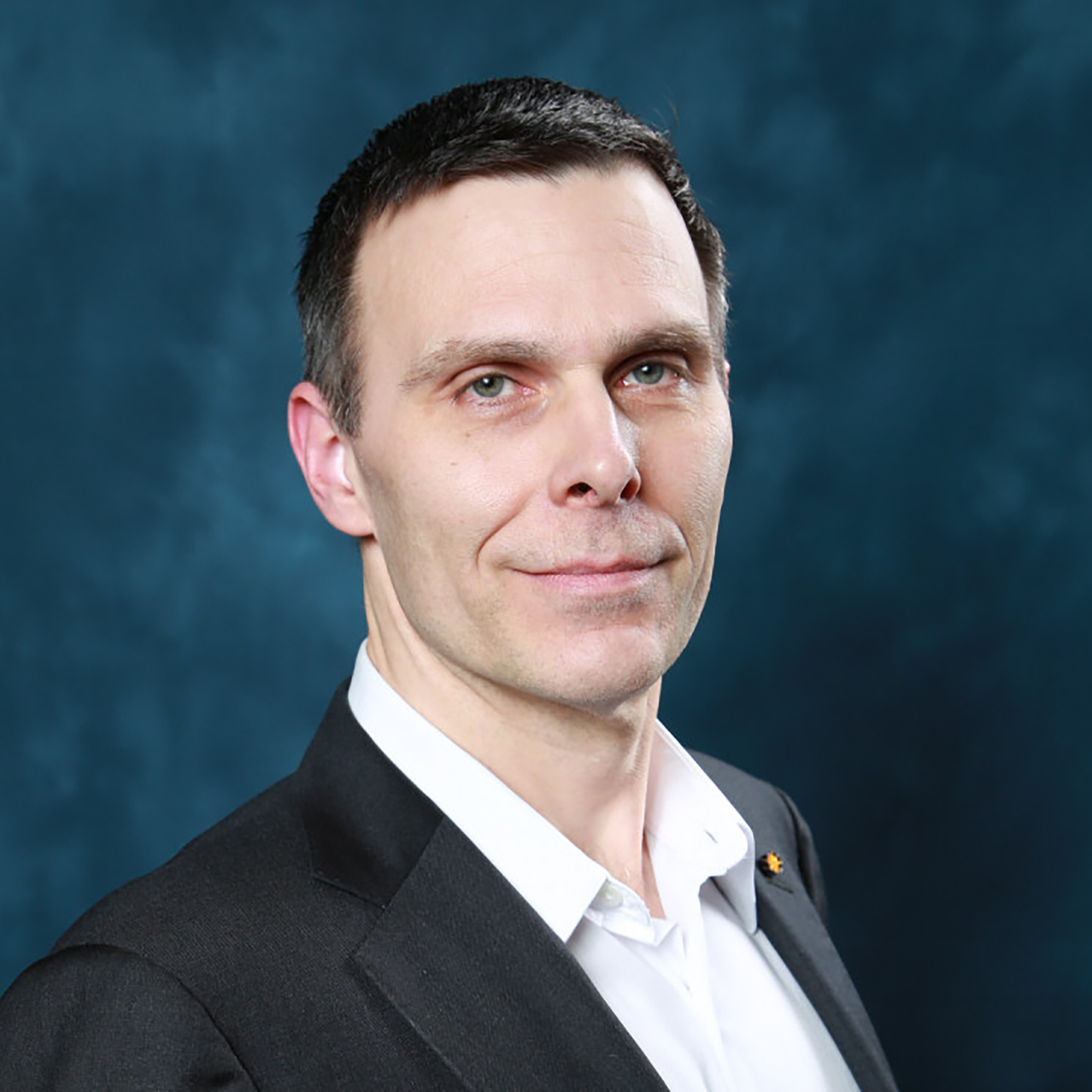
Matt Kaeberline
Chief Executive Officer
Optispan • USA
Science
Dr. Matt Kaeberlein is the Chief Executive Officer at Optispan, Inc., Affiliate Professor of Oral Health Sciences at the University of Washington, and Co-Director of the Dog Aging Project. Dr. Kaeberlein’s research interests are focused on understanding biological mechanisms of aging in order to facilitate translational interventions that promote healthspan and improve quality of life for people and companion animals. He is a Fellow of the American Association for the Advancement of Science (AAAS), the American Aging Association (AGE), and the Gerontological Society of America (GSA). Dr. Kaeberlein has published more than 250 scientific papers in the field of aging biology and has received several prestigious awards including young investigator awards from the Ellison Medical Foundation and the Alzheimer’s Association, the Vincent Cristofalo Rising Star in Aging Research Award, the Murdock Trust Award, the NIA Nathan W. Shock Award, and the Robert W. Kleemeier Award for outstanding research in the field of gerontology. Dr. Kaeberlein is the founding Director of the University of Washington Healthy Aging and Longevity Research Institute, former Director of the NIH Nathan Shock Center of Excellence in the Basic Biology of Aging and the Biological Mechanisms of Healthy Aging Training Program at the University of Washington, and former CEO and Chair of the American Aging Association.
Role of the Board
Commitment to Excellence
Our Scientific Advisory Committee members volunteer their time and expertise to ensure this summit delivers accurate, relevant, and actionable insights for both healthcare professionals and the public. Their guidance helps bridge the gap between cutting-edge research and practical application in healthy longevity.


